Personal Project • cosplay | October 31st, 2025
Hornet Cosplay [HK: Silksong]
An EVA foam mask and a self-drafted cloak to become Hornet from Hollow Knight Silksong, made in one long weekend for Halloween.
Contact cement, Craft foam, EVA foam, Gesso, Interfacing, Plasti Dip, Sewing machine, Spackle, Worbla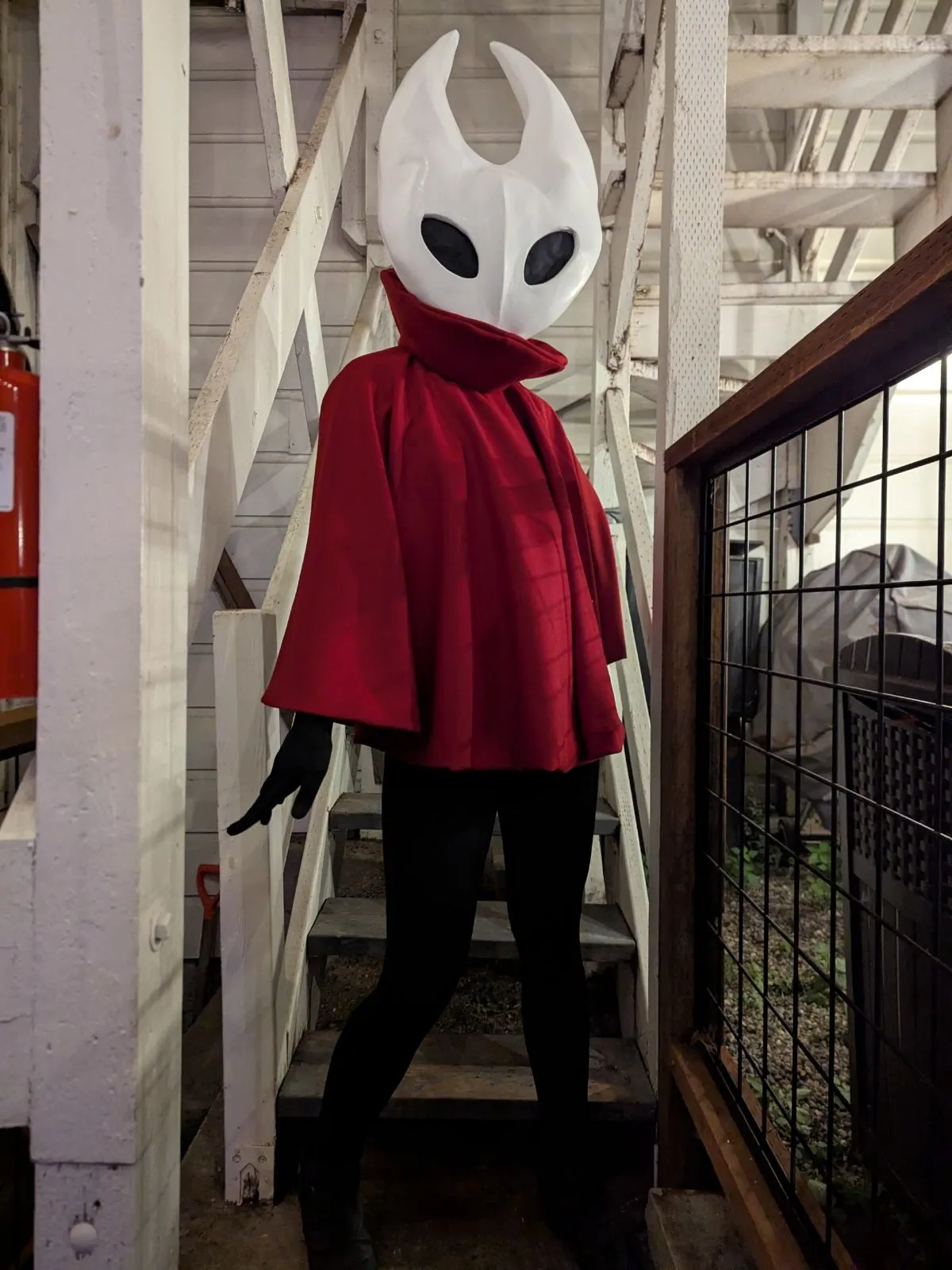 | 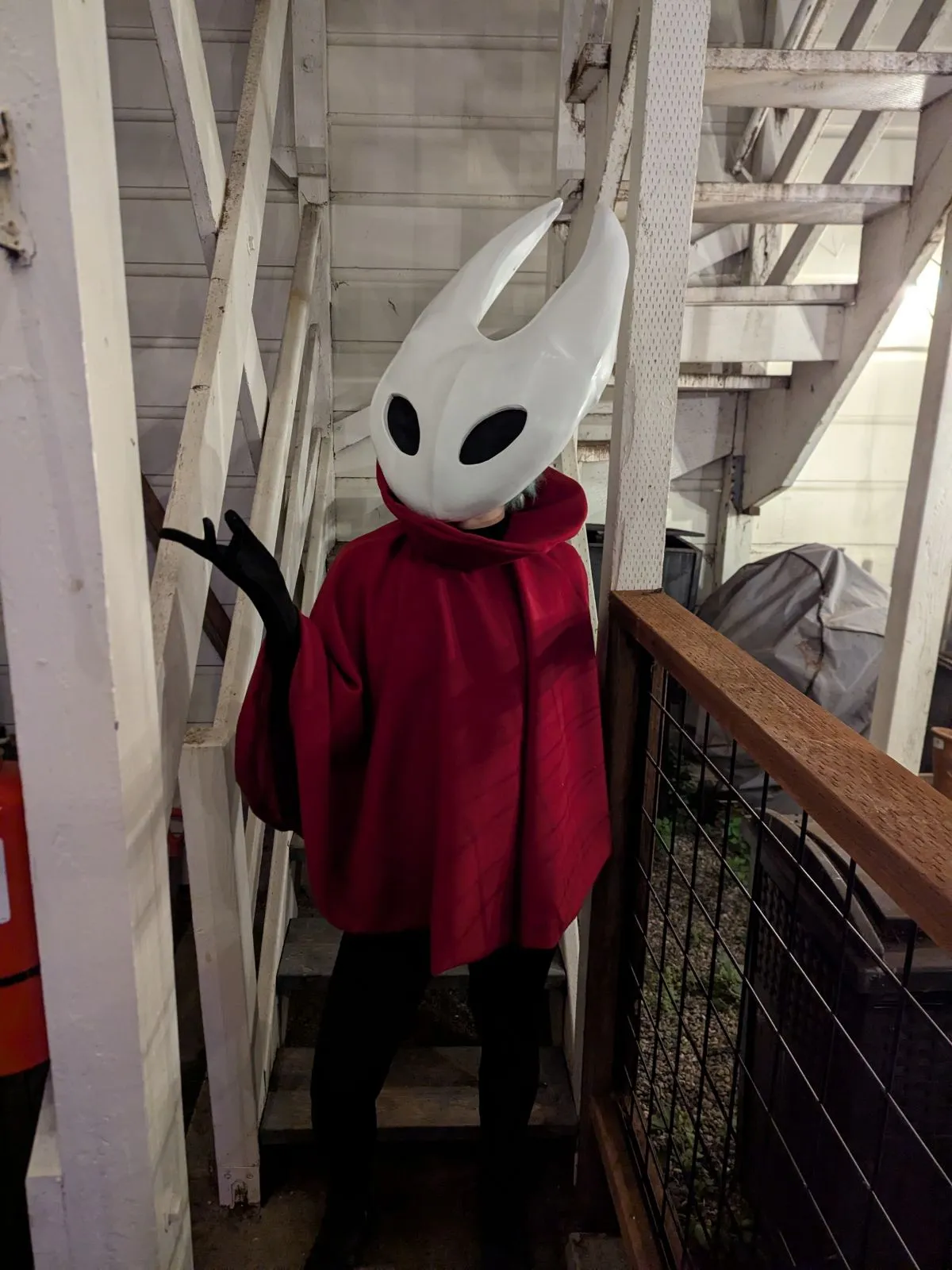 |
Context
I put it to a vote on Twitter and y'all picked Hornet from Hollow Knight: Silksong. So I complied!
Hornet is a pretty simple silhouette: a white mask with two long horns, a red cloak, and her needle. Simple silhouettes are deceptive though! When there are only three shapes, every one of them has to be right.
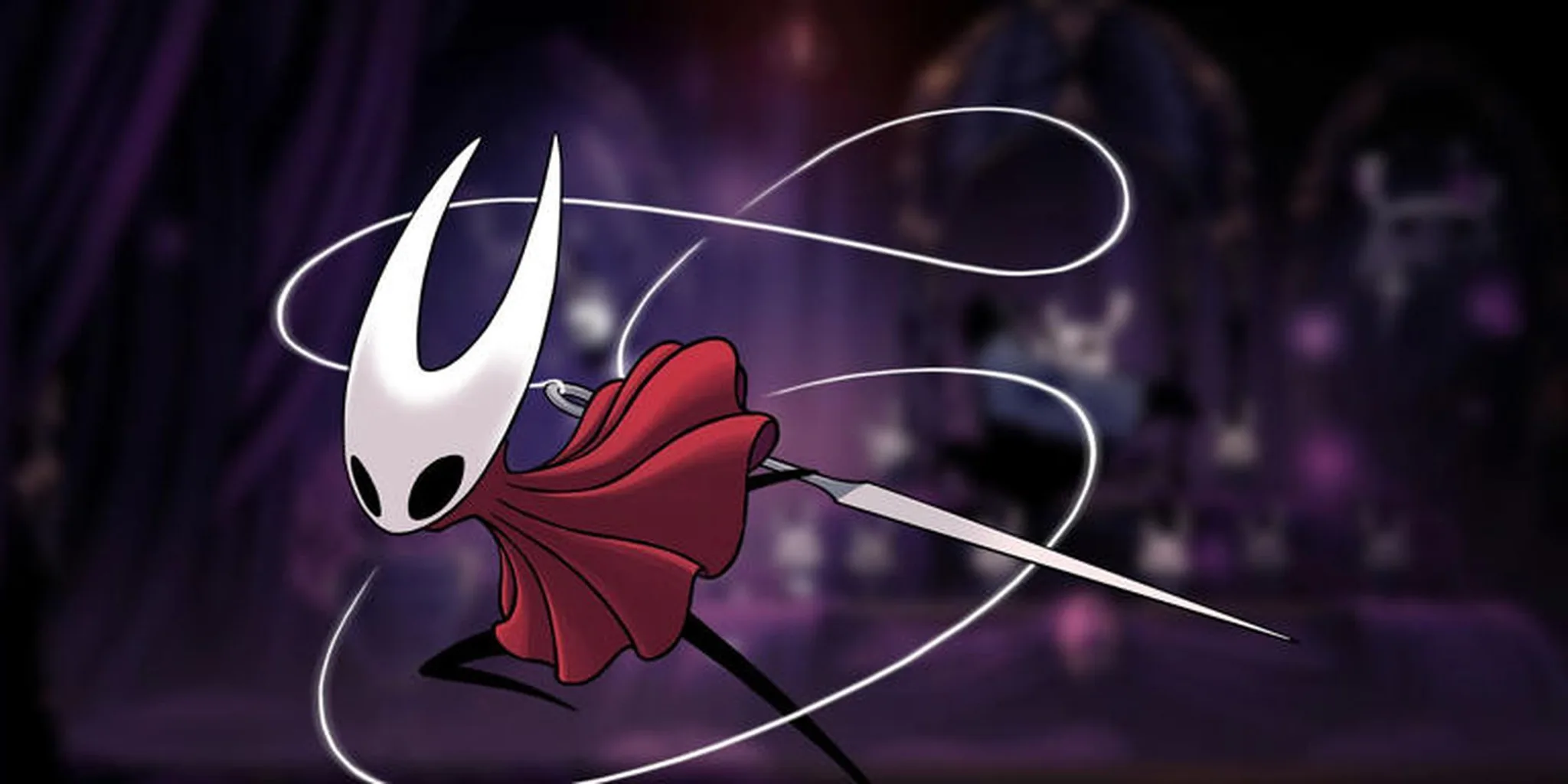
The mask
Patterning
The mask is the whole costume, so I started there. I studied the shape from a bunch of angles, then drew myself a pattern and cut it out of EVA foam. EVA foam is the cosplay go-to for exactly this kind of thing. It's cheap, it cuts with a craft knife, it curves when you heat it, and it glues to itself with contact cement. What's not to love!
 | 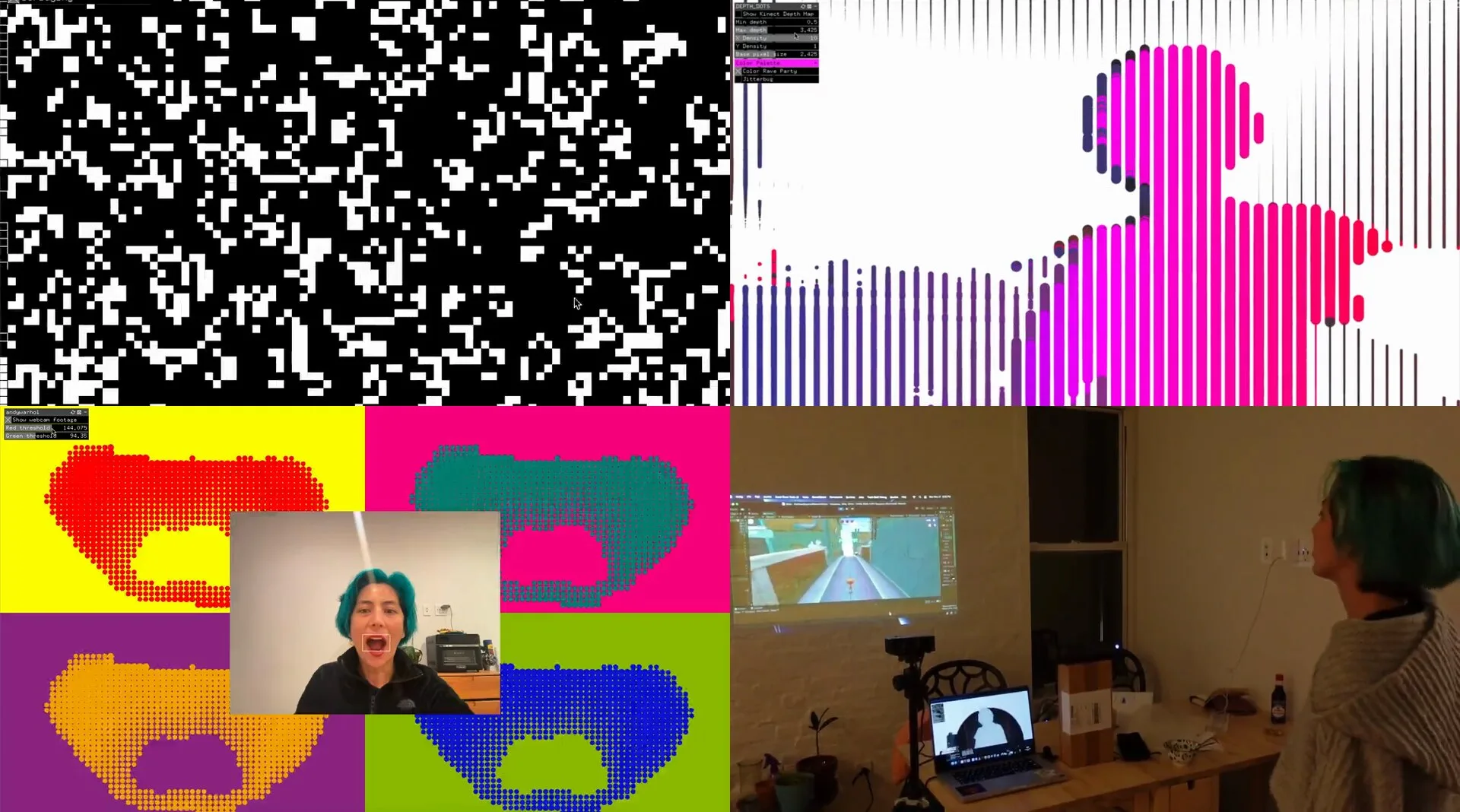
A semester of exercises for Seeing Machines at ITP, a class teaching various techniques and solutions for tracking and sensing people or objects in space, all written in C++ with OpenFrameworks pre gen-AI. I studied computer science and have spent my career on the web, so dropping into C++ and a creative coding framework meant relearning a lot of things I thought I knew.
These are in the order I built them, which is also roughly the order of how much they could see.
Experiment #1: Karina's Game of Life
First, let's talk about Conway's Game of Life!
It's a cellular automaton that mathematician John Conway came up with in 1970. It's also a zero-player game. You set up a grid of cells, hit go, and then never touch it again.
The whole ruleset is four lines:
- A live cell with fewer than 2 live neighbors dies, as if from loneliness
- A live cell with 2
ITP | November 17th, 2023
Ice Bucket Diffuser
A chindogu for hotels that recycles the meltwater from your ice bucket into an aromatic diffuser, built in the aesthetic of MUJI.
Autodesk Fusion 360, FDM 3D Printer, Ultrasonic Mist Module, Vacuum Former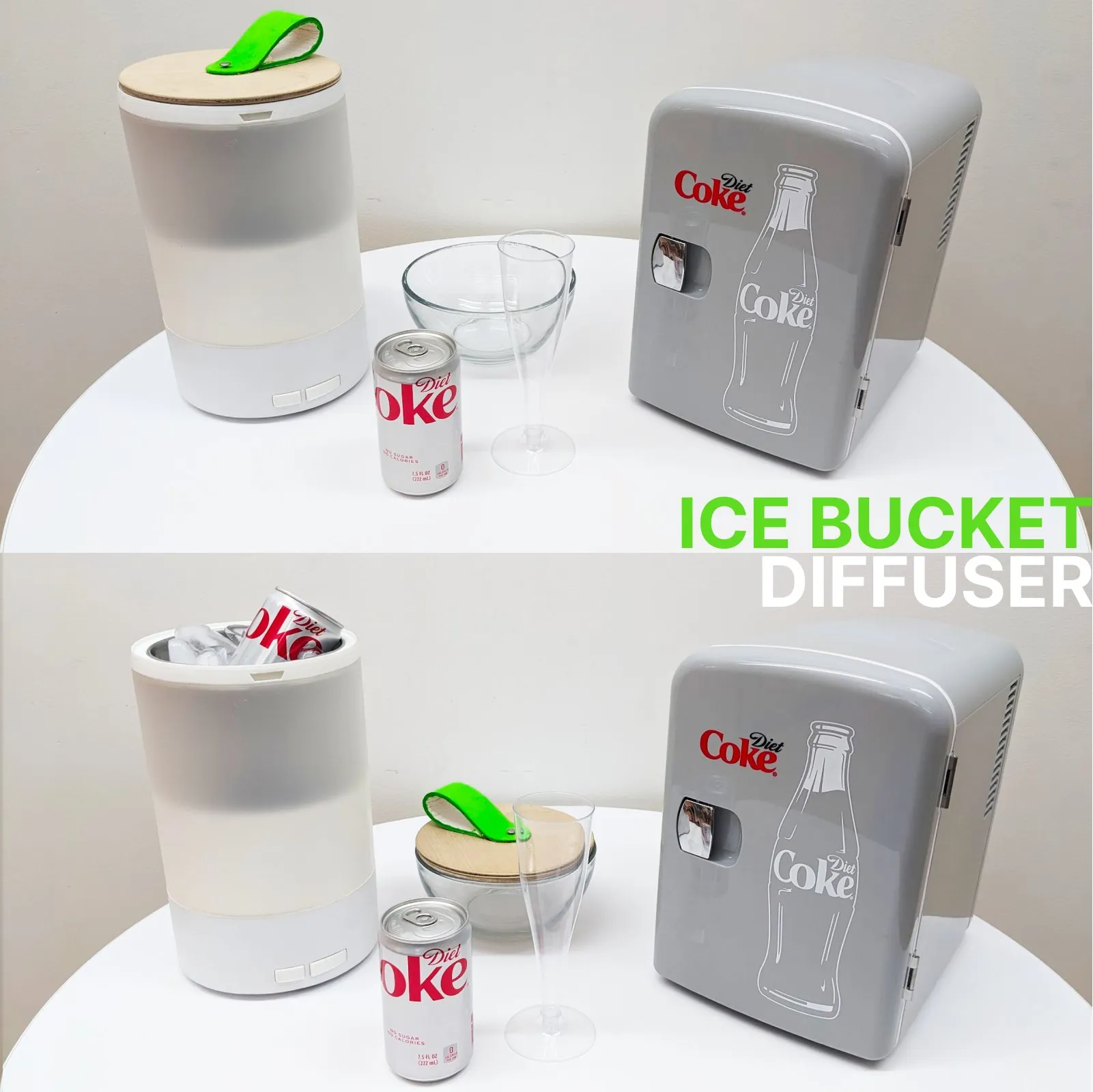 |
The prompt
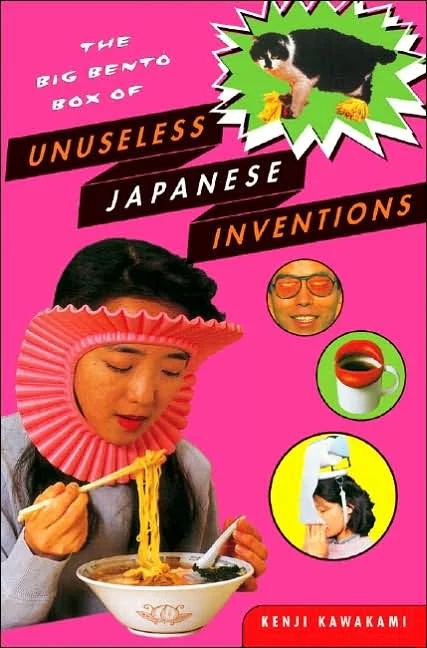
A product for a hotel that is inspired by the absurdity of Kenji Kawakami's chindōgu and the craftsmanship and aesthetic of Kenya Hara (creator of MUJI).
If you need a refresher on what a chindōgu is, I went deep on it during my Floordozer project for this same class: an "unusual tool" that solves an every day problem most can relate to but often creates more problems while doing so.
As for the aesthetic, MUJI started in 1980, and their full name, Mujirushi Ryōhin, means something like "no-brand quality goods". Kenya Hara has been their art director since 2001. He describes the whole philosophy as emptiness: objects that don't shout at you, that stay quiet enough for you to project whatever you want onto them.
Brainstorming
Vera and I went through a lot of ideas including:
- A cargo bathrobe that holds all the things a hotel gives you: door key, toi
ITP | October 24th, 2023
Floordozer Chindogu
A Chindogu activated by a pillow remote control that pushes through piles of clothes on the floor to clear a walking path from your bed.
Arduino Nano 33 IoT, Shark Euro Pro X (Sewing Machine)What is a Chindogu?
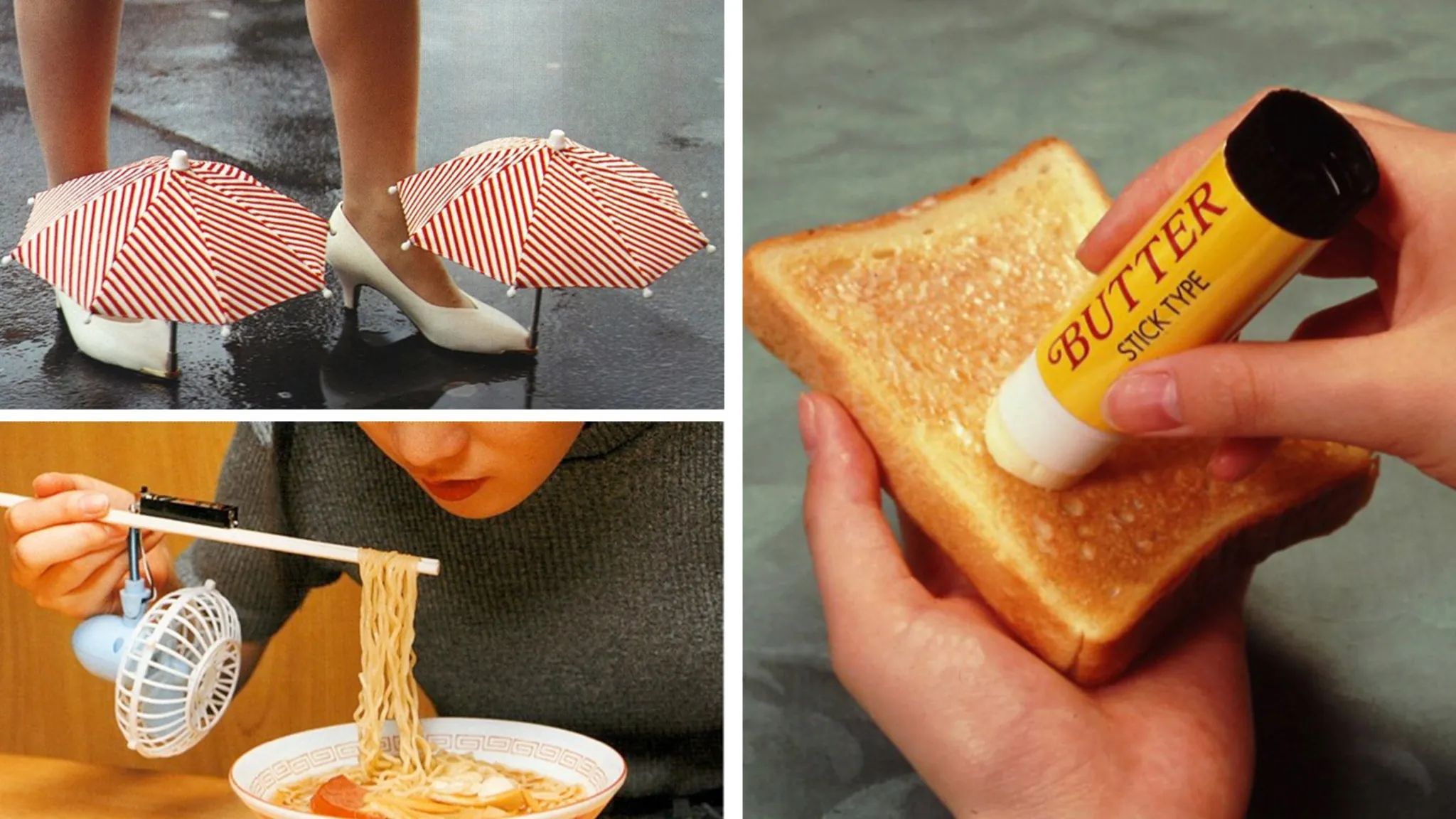
A Chindogu is an "unusual tool" that solves an every day problem most can relate to but often creates more problems while doing so. Kenji Kawakami coined the term in Japan in the '80s and '90s and created a skymall style magazine of user submitted chindogu.
 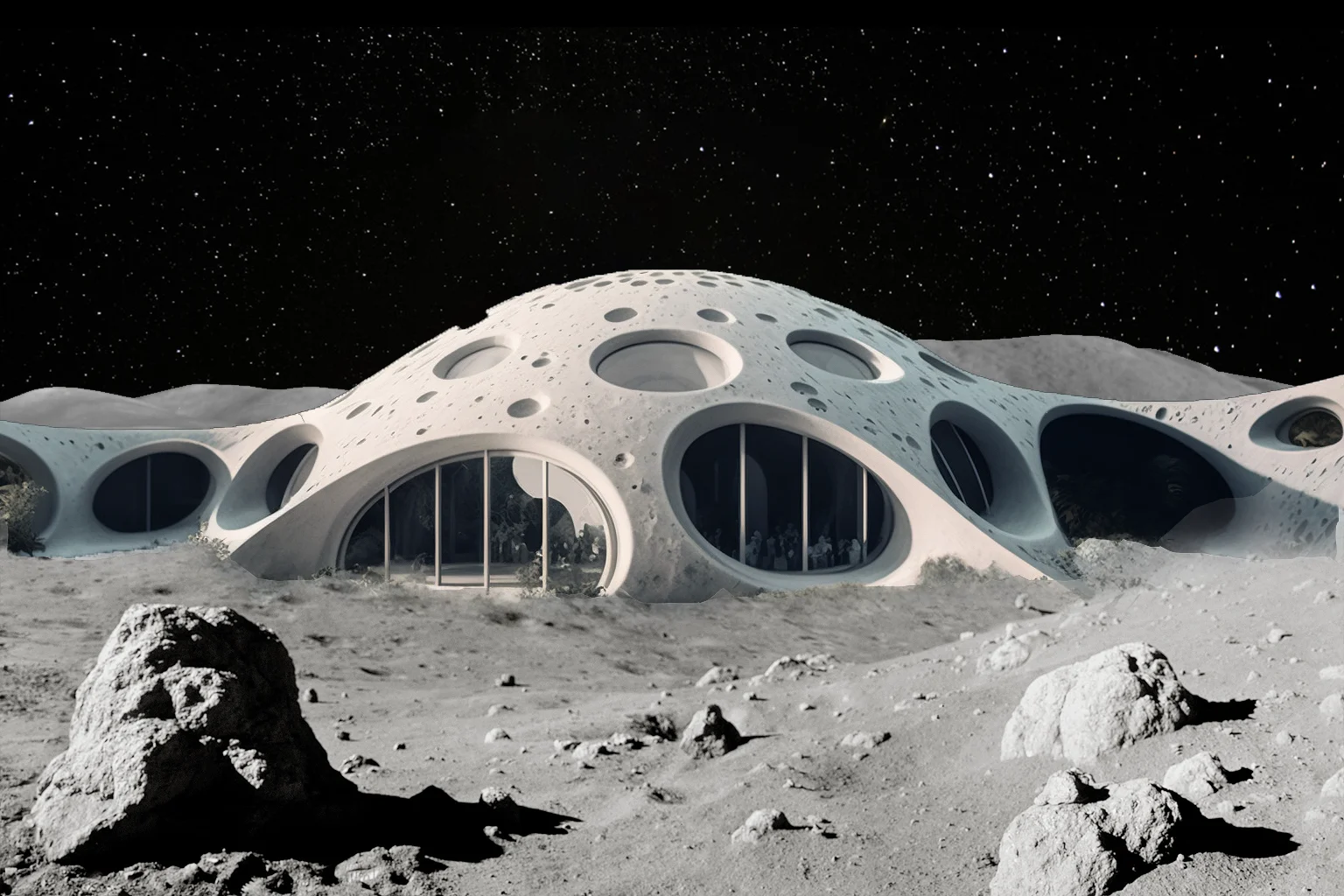
For Designing Spaces & Environments Using AI, we were to research and explore ideas of what to build in space, taking inspiration from the NASA's Artemis mission.
Muse is a place for people to be inspired by and honor the majesty of space, the moon, and all the accomplishments of the pioneers that got us to the moon. It seconds as a small reminder of home and our humanity. The exterior of this space is intended to be a monument built from lunarcrete that blends into the scenery around it, like a less personified and more universally culturally appealing Mount Rushmore.
Inside is intended to be a museum and botanic garden, climate and air controlled with a variety of plants carefully selected for survivability on the moon. Along the paths of the botanic garden will be relics of “firsts”; the first lunar rover, the first golf ball shot on the moon, and so on, for visitors to admire.
Blending into the moon itself, the Muse building will go a few floors deeper than first appears. Excavate to cr
ITP | December 8th, 2022
Masks of Manic-Depression
An explorative digital sculpture of the manic and depressive emotions experienced by a person with bipolar disorder
Autodesk Fusion 360, Google Tilt Brush, Unreal Engine v5Let’s get personal for a hot second here.
In 2020, I got diagnosed with bipolar disorder.
The diagnosis came after 13 years of therapy and 4 other diagnoses. I’ve experienced just under a dozen different types of therapies, and I’ve written quite a few articles on mental health and therapy since my diagnosis.
I decided to creatively explore how one can express the feelings of both a manic high and a depressive low!
Concept
In theater, there’s the common happy/sad, comedy/tragedy Dionysus masks. I thought that would be a good analogy for what I wanted to portray.
In trauma therapy, there’s not only the concepts of mania and depression, but there’s also the concept of hyperarousal and hypoarousal in trauma states. This is called The Window of Tolerance.
In the Window of Tolerance model, people go from high energy anxiety (hyperarousal) to low energy lethargy (hypoarousal). The ideal is to stay in the “window of tolerance” inbetween.
I also have complex PTSD, so I’m intimately familiar with this model as well as manic depression.
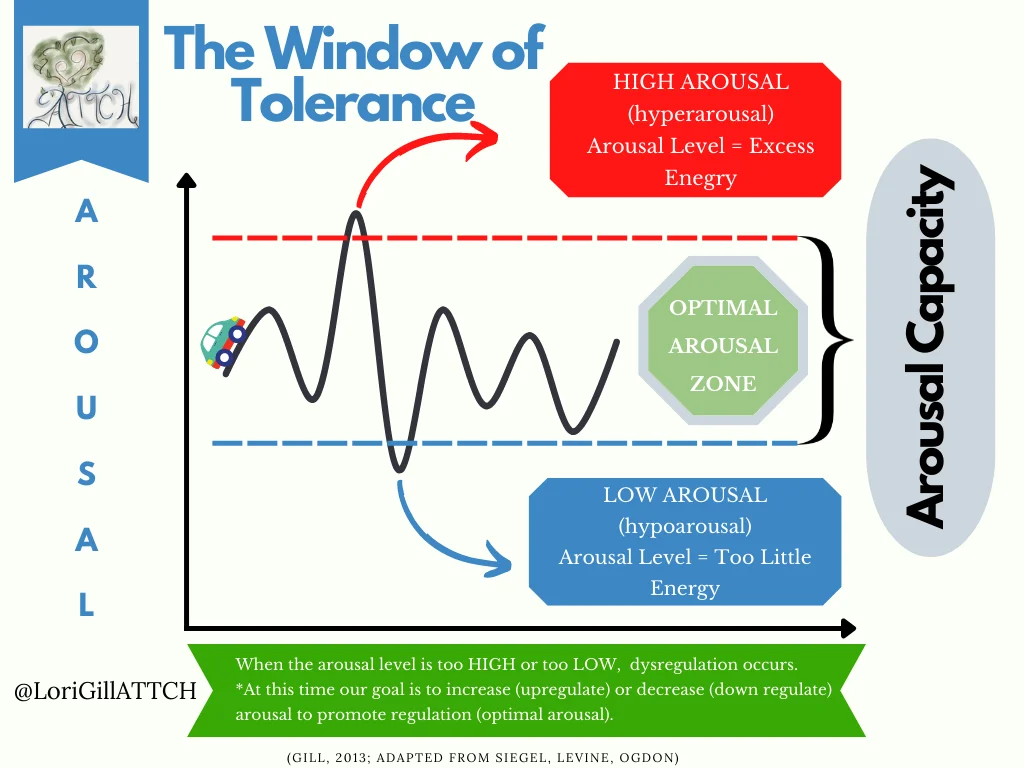
People with rapid cycling bipolar disorder or suffering from extreme trauma state switching have a narrow band for their Window of Tolerance. They also have a proble
ITP | December 7th, 2022
Textile Interface Experiments
A series of experiments creating different interfaces out of soft materials.
Arduino Nano 33 IoT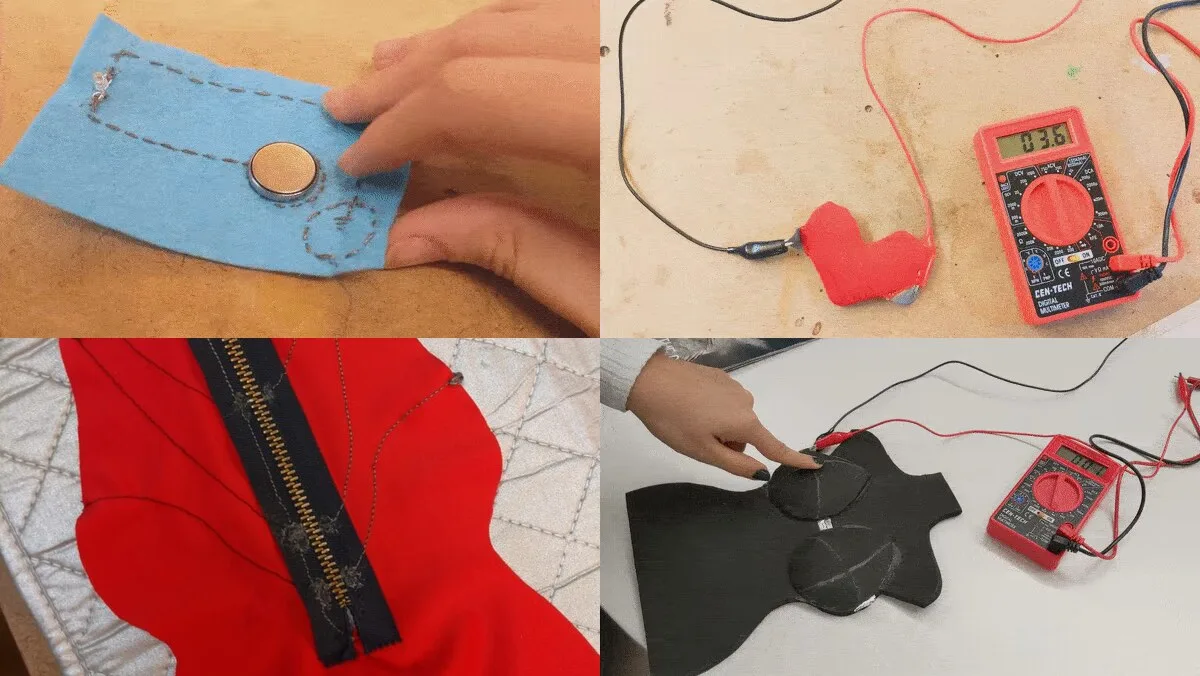
Experiment #1: Button Swatch
Materials
- Square of blue felt
- 3V button battery
- Conductive thread
- 3mm LED, Magenta, Transparent DC 2V – 3.2V 20mA
Interaction
You place a 3V button battery plus-side down onto the circle with a plus sewn into it and fold the corner with the ground symbol to the back side to watch the LED light up!
Possible Futures
Really cool idea for connecting circuits via folding with textiles. Also, didn’t think of ever using a button battery, and that’s way more convenient for wearables.
Experiment #2: Heart Pressure Button
Context
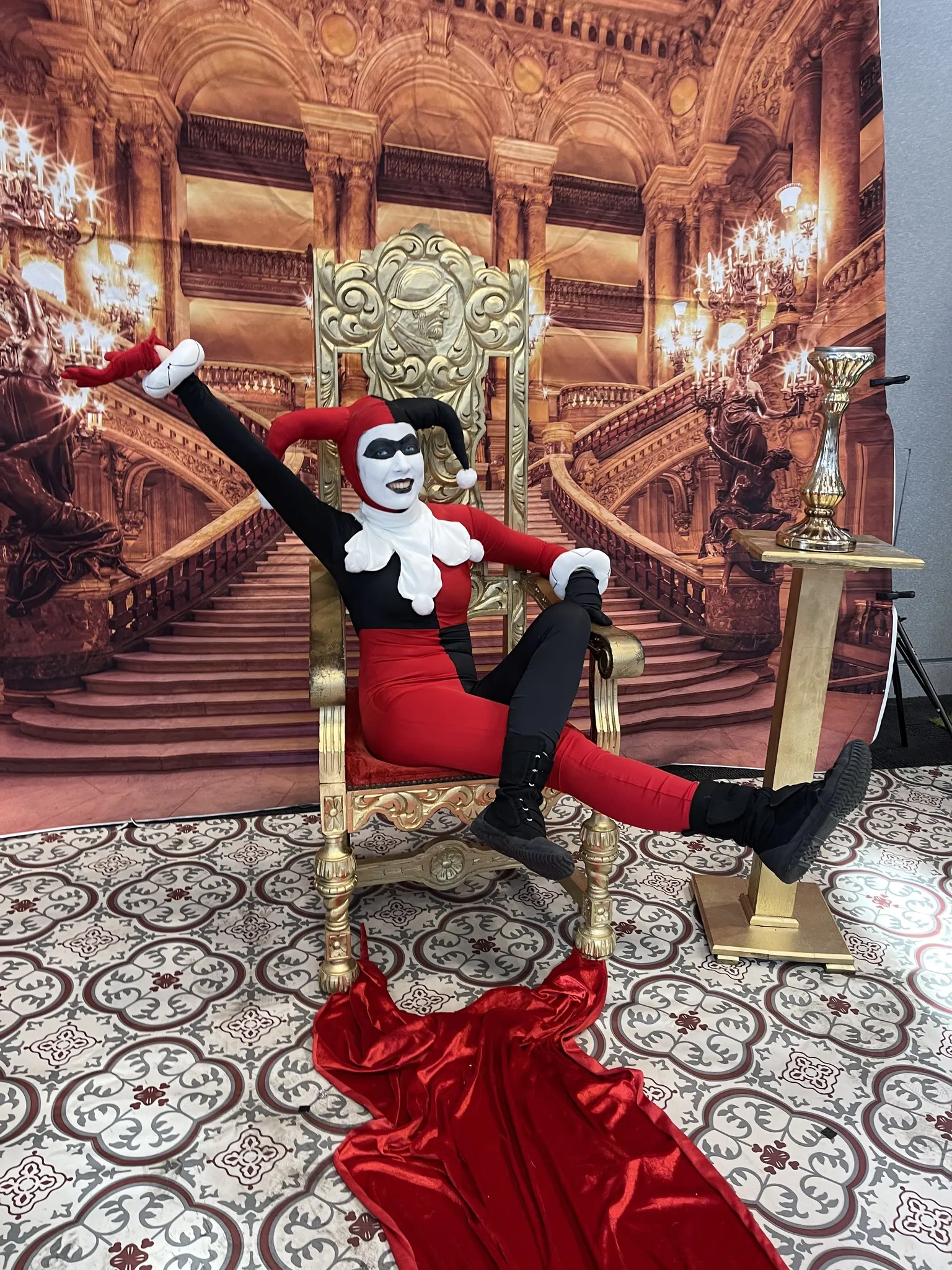
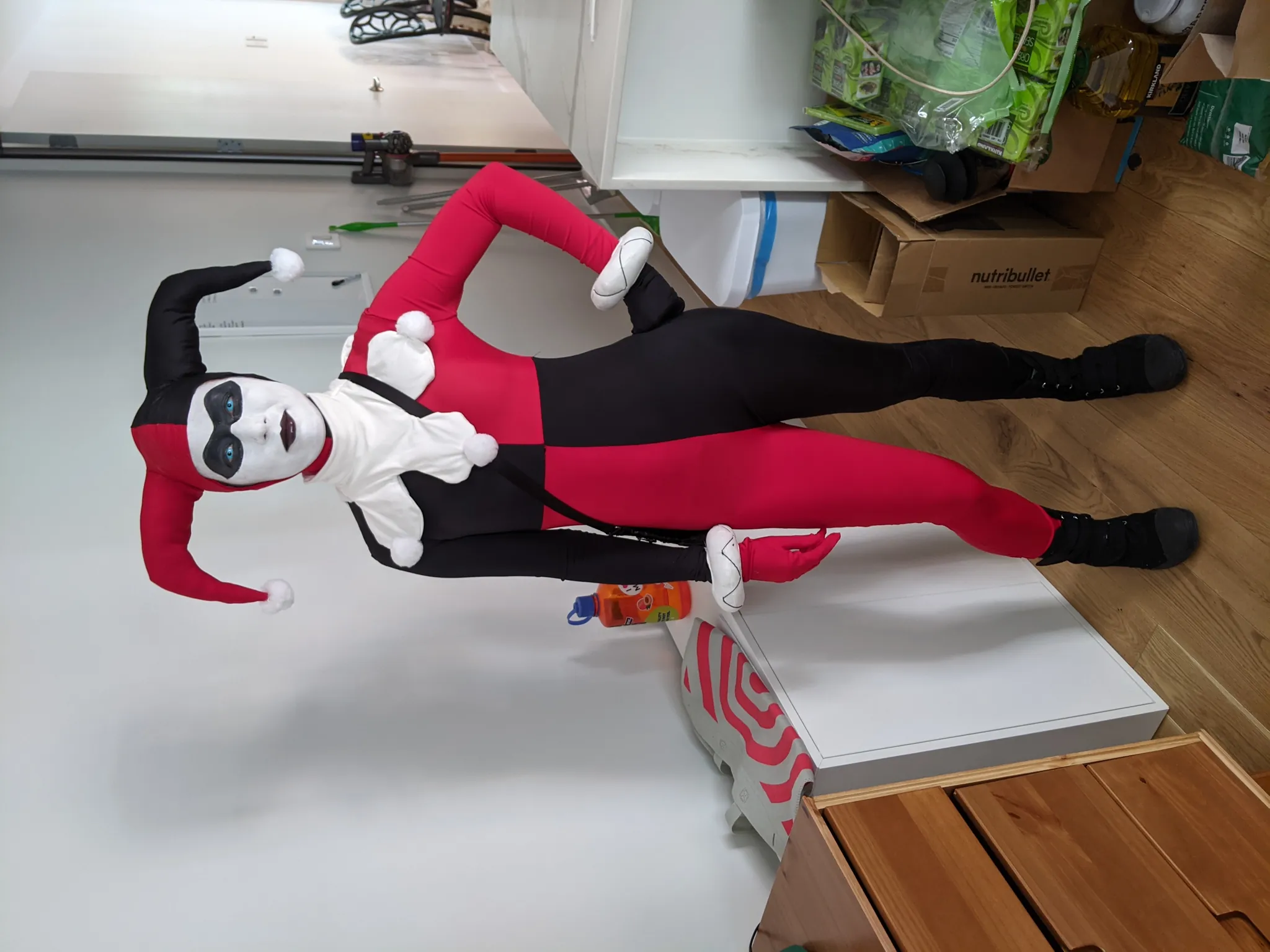
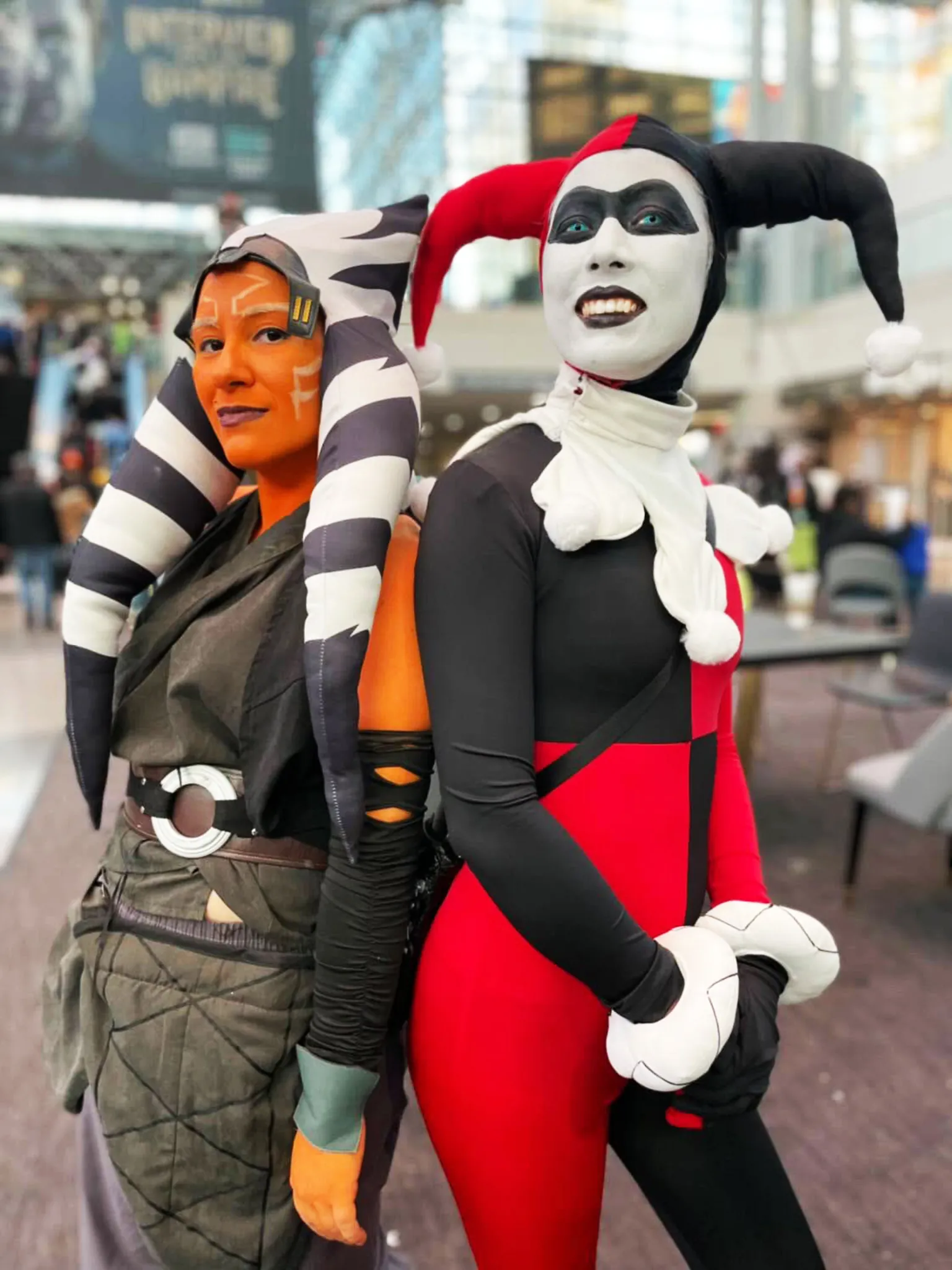
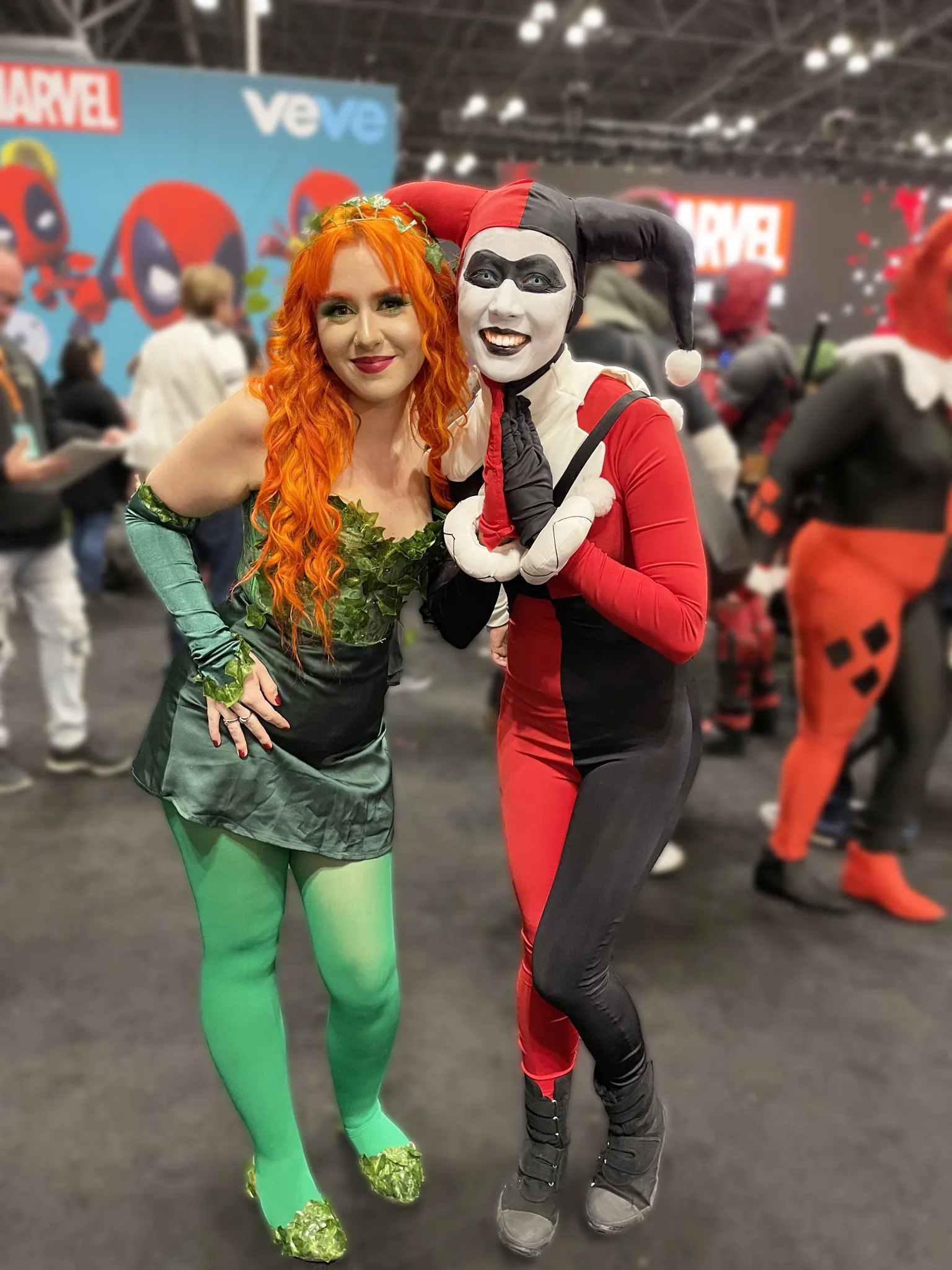
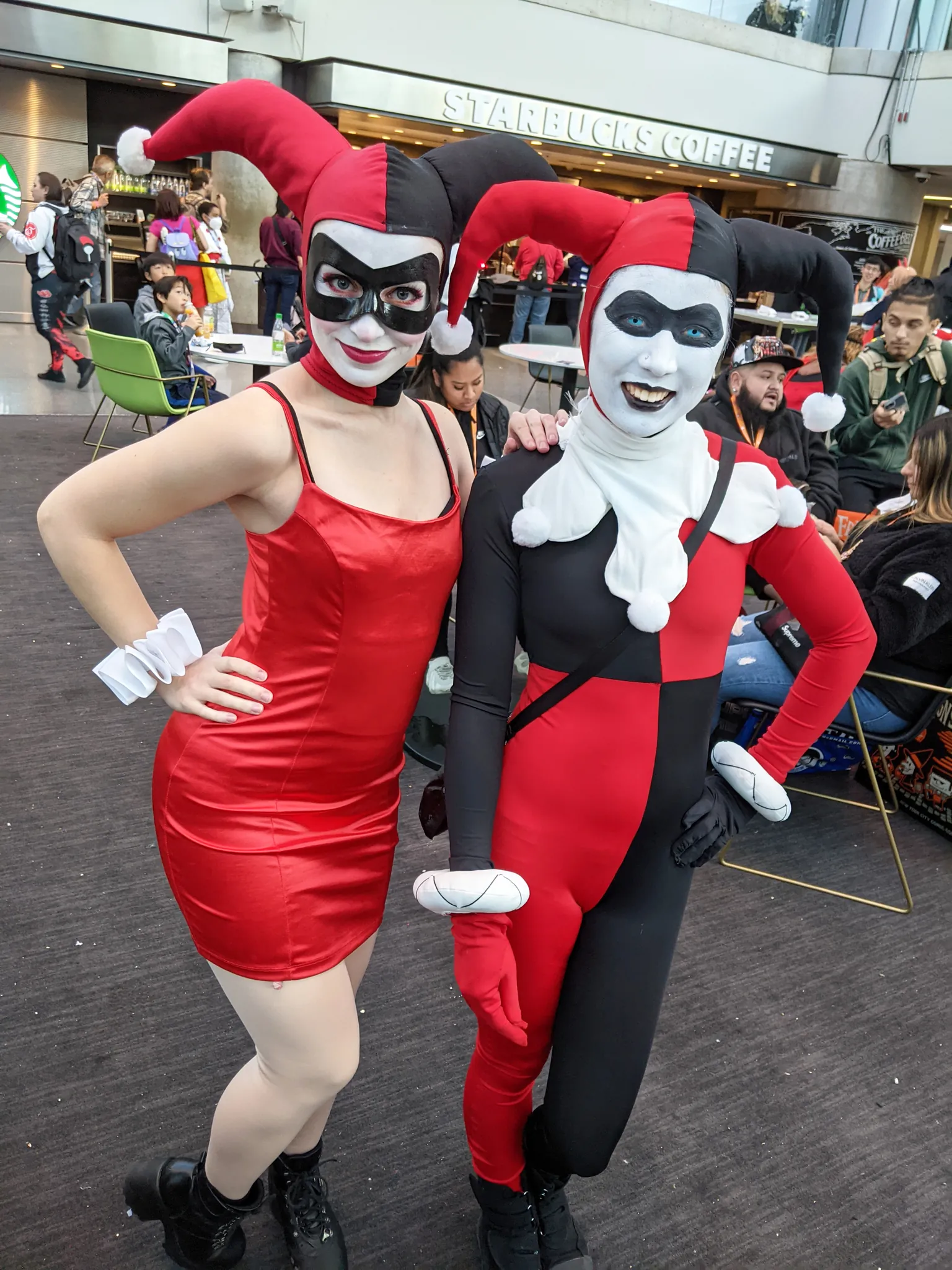
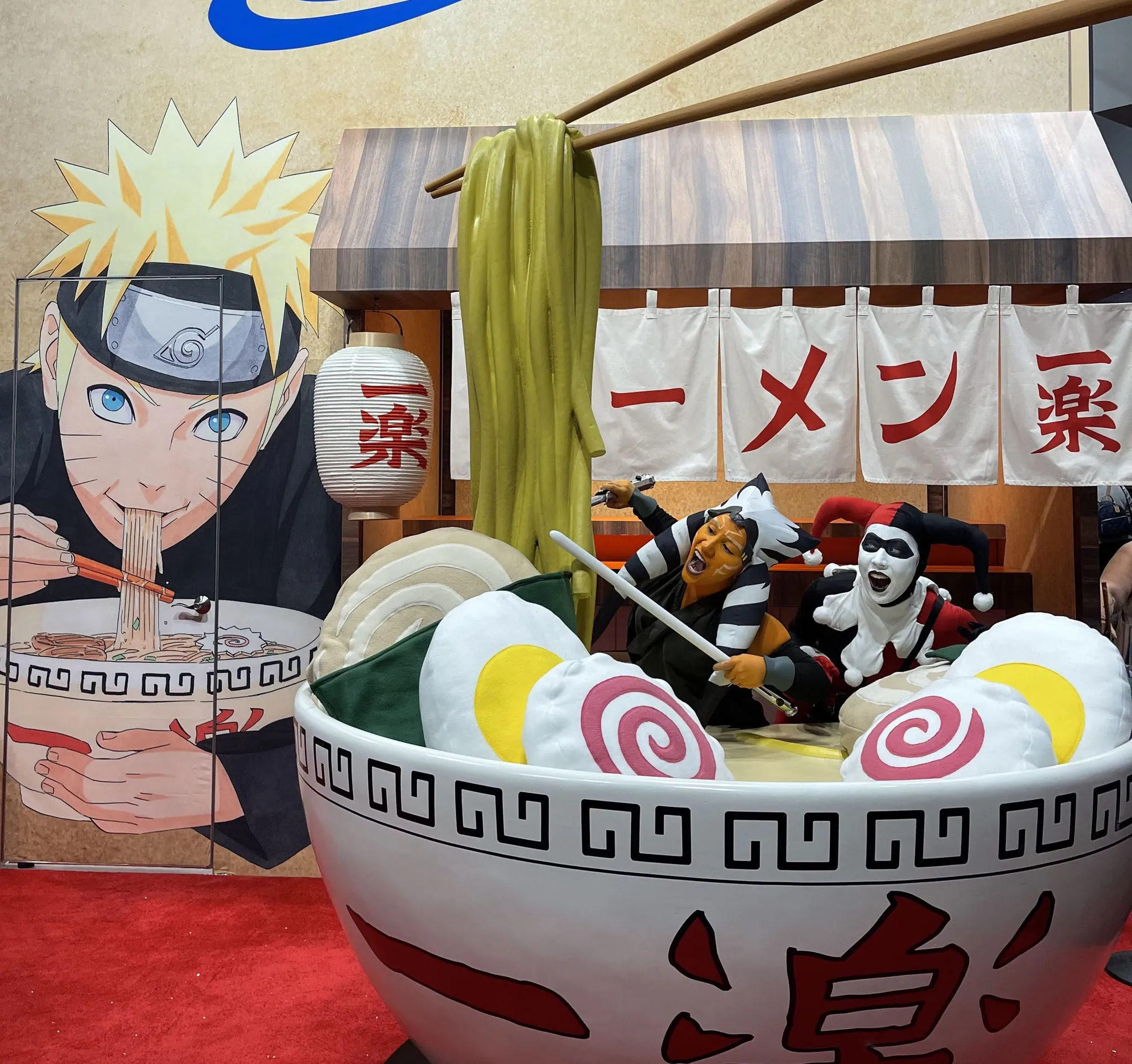
As a 90s kid, I grew up a huge fan of Batman: The Animated Series and Harley Quinn was always one of my favorite characters. 2022 marked Harley Quinn's 30th birthday of her inception as a character for the show, so what better way to celebrate than to dress up as her for New York Comic Con?
![Illustration of a harlequin dressed woman
Gray Area | April 20th, 2020
Sewing Triptych
A triptych illustrating the process of creating a garment using different CSS animation techniques.
Adobe Illustrator, CSS, HTML, JavaScriptIn spring 2020, I took Gray Area's Computer Science in Studio Art 12-Week Immersive. One of our first challenges was to make a triptych purely with CSS + HTML (no JavaScript!)
Because I am a frontend engineer professionally, I wanted to challenge myself. I made a checklist of things I wanted to accomplish:
Every pane has to use a different method of generating graphics and animation. I chose:
- SVG. SVG has its own markup and its (using the animateTransform and animate tags)
- Sprite map. Part of the reason this took me so long is that I drew my own sprite map from scratch. A is a large image file with a grid of images that each represent a keyframe in an animation. You can then use the CSS value in the animation property to flip between keyframes in one giant image.
- CSS-only. Make shapes and animate using only CSS, like our other assignments.
I also used this an opportunity to:
- Utilize CSS variables. I've actually never used plain CSS variables; I've usually used SASS or LESS ones, or JavaScript variables and something like emotion or styled-components. -Make it responsive. My single div challenge looked ass awful on mobile, so wanted to ensure this one was mobile-friendly.
Biggest issues and solutions
I couldn't get the sprite map to line up from frame-to-frame, even though I use